Quiet Operation Without Grinding or Binding
Garage Door Roller and Track Repair in Charlotte for noisy doors, binding movement, and rollers that leave black residue on tracks
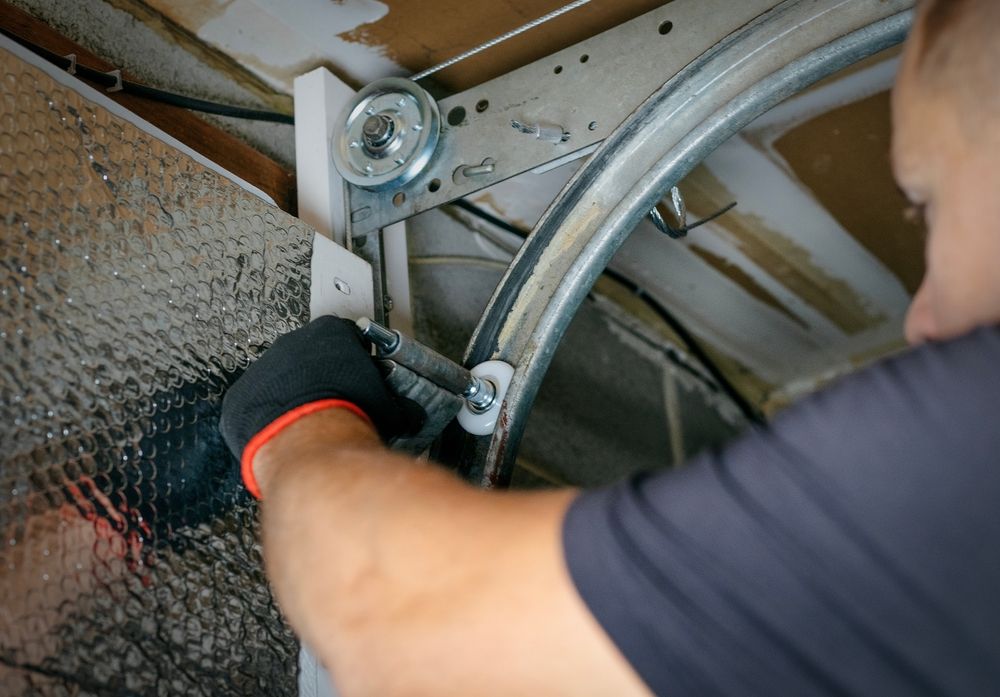
Worn rollers with cracked bearings or flat spots on the roller wheels create the grinding, scraping noise that echoes through attached garages during every door cycle, while misaligned or dented tracks force rollers to bind and strain the opener motor. B&G Garage Door replaces steel or nylon rollers that have developed play in their shafts and realigns tracks that have shifted from anchor brackets, restoring smooth travel and reducing the vibration that wakes sleeping family members in Charlotte homes. Roller and track repair eliminates the metal-on-metal contact that accelerates wear throughout the entire door system.
Track repair involves loosening the mounting brackets, using a level to verify vertical plumb and proper radius curve at the horizontal-to-vertical transition, adjusting bracket position to correct misalignment, and re-tightening all fasteners to lock the track in proper position. Roller replacement requires removing the hinge pin, sliding out the old roller stem, inserting a new roller with sealed bearings, and reinstalling the hinge assembly without over-tightening bolts that could compress the roller stem and cause premature bearing failure.
Schedule a track and roller inspection when door noise becomes noticeable or when the door hesitates during operation.
What You Notice Once Rollers and Tracks Are Serviced
Roller and track repair transforms door operation from loud and labored to smooth and nearly silent, depending on roller material choice. New nylon rollers with sealed ball bearings eliminate the scraping and rumbling that metal-wheel rollers produce, while realigned tracks allow the door to travel without binding or jerking at specific points in the cycle.
Once B&G Garage Door completes roller and track service, the door glides through its full range without grinding noises, the opener runs quietly without vibrating the wall or ceiling, and the door no longer sticks or jerks when passing through the curved section where vertical and horizontal track sections meet. You stop finding black rubber dust or metal shavings below the tracks, and the door responds smoothly to opener commands without hesitating mid-travel.
Track alignment also affects how rollers wear—even slightly misaligned tracks force rollers to run at an angle, which accelerates bearing degradation and causes uneven wear patterns on the roller wheels. Correcting track position during roller replacement extends the service life of the new rollers and prevents the same noise and binding from returning within months.
What Property Owners Usually Ask
Questions about roller and track service often focus on noise reduction and whether repair or replacement is more appropriate.
What causes garage door rollers to wear out?
Rollers wear from the constant weight and friction of door movement, with steel rollers typically lasting longer than plastic-wheel designs but producing significantly more noise, while nylon rollers offer quieter operation at the cost of shorter lifespan in high-use applications.
How do I know if tracks are misaligned?
Misaligned tracks cause visible gaps between the roller wheels and the track edges, force the door to bind or stick at specific heights, or produce uneven spacing between the track and door edge when viewed from inside the garage.
Why does the door shake or vibrate during operation?
Shaking results from worn rollers with loose bearings that allow side-to-side play, from bent track sections that force the door to jump as rollers pass through the damaged area, or from loose track brackets that allow the entire track assembly to flex under door weight.
Can tracks be straightened if they are bent or dented?
Minor track dents can sometimes be straightened using specialized tools if the steel has not creased or cracked, but severely kinked or twisted sections require track replacement because straightening compromises structural integrity and creates weak points that fail under repeated stress.
What type of rollers work best for attached garages in Charlotte?
Nylon rollers with sealed ball bearings provide the quietest operation for attached garages where noise transmission into living spaces is a concern, though steel rollers may be preferred for heavy or high-cycle commercial doors where durability outweighs noise considerations.
B&G Garage Door addresses roller wear and track misalignment with quality replacement components and precise alignment procedures. Set up an appointment to eliminate door noise and restore the smooth, quiet operation that makes garage access unobtrusive again.