Overhead Systems Built for Real Operating Demands
Commercial garage door installation in Charlotte for warehouses, service bays, and loading dock facilities requiring systems matched to high-cycle operational demands.
Overhead door failures don't wait for convenient moments in commercial settings, and the door systems that serve warehouses, service bays, loading docks, and fleet facilities face a different category of demand than residential doors. B&G Garage Door handles commercial garage door installation in Charlotte for businesses that need systems matched to their operational cycle, opening frequency, and load requirements — not a residential door scaled up.
Commercial garage door selection involves decisions that directly affect daily workflow. Sectional steel doors work well for most warehouse and light industrial applications, providing insulation options and durability under moderate cycle counts. High-cycle operations — facilities cycling doors dozens of times per day — require doors and hardware rated for that frequency. Rolling steel doors serve applications where the door needs to retract fully out of the clearance path rather than overhead. B&G evaluates the physical space, operational frequency, and environmental exposure before recommending a system, because installing an under-specified door into a high-demand environment accelerates wear and shortens service life significantly.
Speak with B&G Garage Door about your facility's requirements to get a recommendation grounded in how the space actually operates.
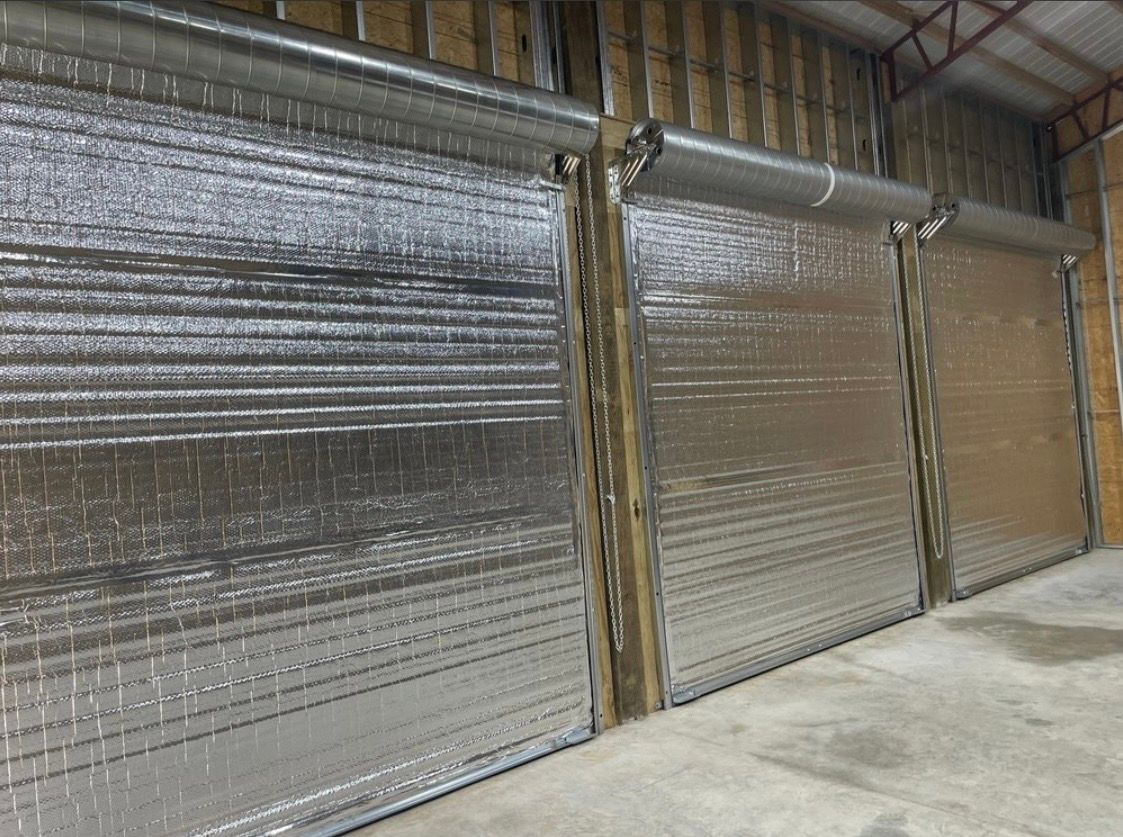
How Commercial Door Installation Differs from Residential Work
The installation process for commercial garage doors involves structural considerations that residential work does not. Header clearance, side room, and floor levelness all affect which door systems are viable in a given opening. Commercial doors are heavier, often requiring heavier-gauge spring systems and reinforced mounting hardware capable of handling the additional load across thousands of cycles. Electrical requirements for commercial openers also differ — high-cycle and heavy-duty operators frequently require dedicated circuits, and proper integration with building access control or safety sensors is part of a complete installation.
After installation, the door should operate at consistent speed through the full travel range with no binding, hesitation, or drift. Commercial operators are set to specific open and close speeds appropriate for the door weight and the facility's workflow, and safety reversal systems are verified before the installation is complete. Employees working near or under the door during operations will notice that the system responds predictably — stopping and reversing on contact rather than continuing to close under force.
Charlotte's summer humidity and heat affect roll-up door curtain materials and weather seals over time. Installations account for thermal expansion in steel components, and weather seal selection is matched to the facility's exposure and temperature range, particularly for doors on the south or west face of a building.
Frequent Questions About Commercial Door Installation
Business owners and facility managers evaluating commercial garage door installation have questions that differ from residential inquiries.
What cycle rating should I look for in a commercial door?
Cycle ratings reflect how many open-close cycles the hardware is designed to handle before requiring major service — light commercial doors may be rated for 10,000 to 20,000 cycles while heavy industrial applications require hardware rated significantly higher.
How does building structure affect which door can be installed?
The structural header above the opening must support the door's weight and the spring system's counterbalance load — in some facilities, header reinforcement is necessary before installation can proceed.
What access control options are compatible with commercial openers?
Most commercial operators can integrate with keypad entry, card reader systems, loop detectors for vehicle-triggered operation, and network-connected controls depending on the facility's security requirements.
Why does opening frequency matter when selecting door hardware?
Hardware components including springs, rollers, and hinges carry cycle ratings — operating a door rated for moderate use in a high-frequency environment results in accelerated wear and more frequent unplanned service interruptions.
What does the installation process look like from the facility's side?
After confirming door specifications and scheduling, installation typically involves removing any existing door, preparing the opening, mounting the new system, setting spring tension, installing the operator, and verifying all safety functions before the system goes into service.
B&G Garage Door works with Charlotte-area businesses and property managers to match door systems to actual facility demands rather than defaulting to standard configurations. Request a site evaluation to review the opening dimensions and operational requirements before selecting a system.