Panels That Match Without Full Door Replacement
Garage Door Panel Replacement in Charlotte for doors with dented, cracked, or weather-damaged sections that compromise appearance and function
A single damaged panel—dented by vehicle impact, cracked from hail, or rotted from water intrusion—often does not justify replacing the entire door, especially when the remaining sections and hardware remain structurally sound. Panel replacement swaps out the damaged section while leaving the functional portions of the door intact, preserving your investment in the existing system and maintaining curb appeal in Charlotte neighborhoods. B&G Garage Door sources matching panels when available from the original manufacturer, maintaining consistent appearance across the door width and avoiding the mismatched look that occurs when replacement panels differ in texture, embossing pattern, or color.
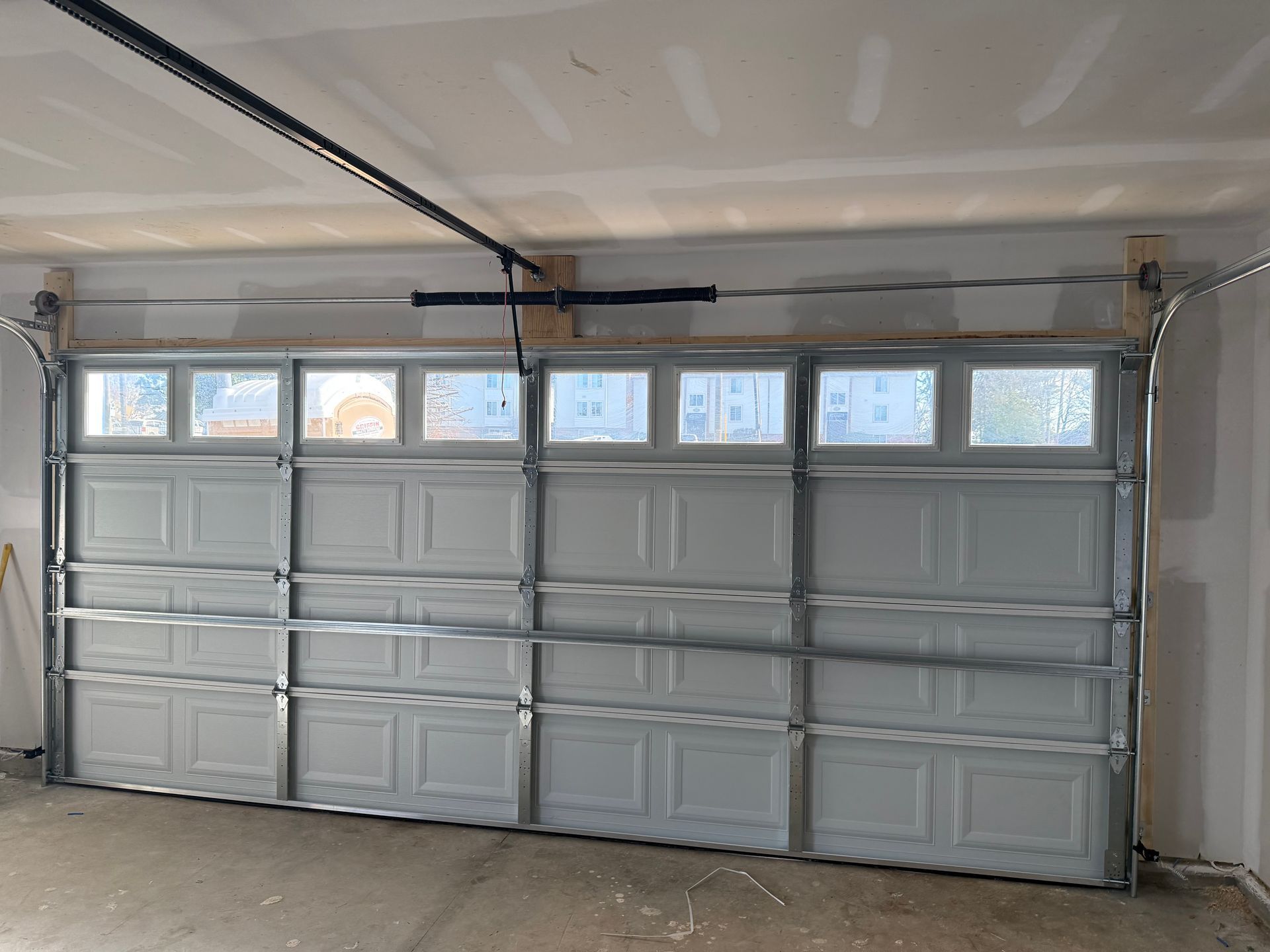
Panel replacement begins with disconnecting the opener and securing the door to prevent movement, releasing spring tension to remove door weight, removing hinge hardware that connects the damaged panel to adjacent sections, sliding the damaged panel out of the track system, positioning the replacement panel, and reassembling hinges and roller brackets before restoring spring tension. The process requires precise alignment to prevent binding and ensure weatherstripping seals properly along panel joints.
Request a panel evaluation to determine whether replacement is feasible and cost-effective compared to full door replacement.
The Difference Between Panel Repair and Full Replacement
Panel replacement makes sense when damage is isolated to one or two sections, when the door model is still manufactured and replacement panels remain available, and when the door's overall condition justifies the repair cost. The decision hinges on whether matching panels can be sourced and whether the door's springs, tracks, and hardware have sufficient remaining lifespan to justify investing in cosmetic repair.
After panel replacement, the door presents a uniform appearance from the street with no visible color mismatch or texture difference, the door operates smoothly without binding at the replaced section, and weatherstripping along the panel joints prevents air infiltration and water entry. The replaced panel integrates structurally with the existing door, sharing load through the hinge connections and maintaining the door's overall rigidity and wind resistance.
Panel matching becomes difficult or impossible when the door model has been discontinued, when the original finish has faded significantly from sun exposure, or when the manufacturer has changed panel embossing patterns or construction methods. In these cases, full door replacement may be the only option to restore appearance, or homeowners may choose to replace multiple panels to create a color-matched lower section while accepting some variation from upper panels that remain less visible.
Questions Before Starting Your Project
Panel replacement decisions depend on door age, panel availability, and the extent of damage beyond the affected section.
What types of panel damage can be repaired versus requiring replacement?
Small dents in steel panels can sometimes be hammered out and refinished, but creased metal, cracked fiberglass or vinyl, and rotted wood sections require full panel replacement because structural integrity has been compromised and cosmetic repair will not restore strength or appearance.
How closely will a replacement panel match my existing door?
Match quality depends on door age and manufacturer practices—recent models often yield near-perfect matches if panels are sourced from the original manufacturer, while older or faded doors may show noticeable color variation even with factory panels due to UV degradation of the original finish over time.
Why would I replace the entire door instead of just the damaged panel?
Full replacement makes more sense when multiple panels are damaged, when the door is more than 15 years old and springs or hardware are near end-of-life, when replacement panels are unavailable for discontinued models, or when the cost of panel replacement approaches 50 percent of a new door's price.
What happens to the rest of the door during panel replacement?
The entire door system is inspected during panel replacement, and worn rollers, hinges, or weatherstripping discovered during disassembly can be addressed at the same time, often reducing labor costs compared to scheduling separate service visits for those items later.
Can insulated panels be replaced on older non-insulated doors?
Mixing insulated and non-insulated panels creates weight imbalance that affects spring tension and door operation, so replacement panels must match the insulation specification of the original door to maintain proper counterbalance and prevent premature spring or opener failure in Charlotte installations.
B&G Garage Door evaluates panel damage and checks replacement availability before recommending repair or full door replacement. Call our office to discuss your specific door condition and explore whether panel replacement offers a practical alternative to complete door installation.